Mapping correlations between kit supplier changes and late-game goal patterns in Allsvenskan wagering lines
Sofia Braun · Sep 29, 2026
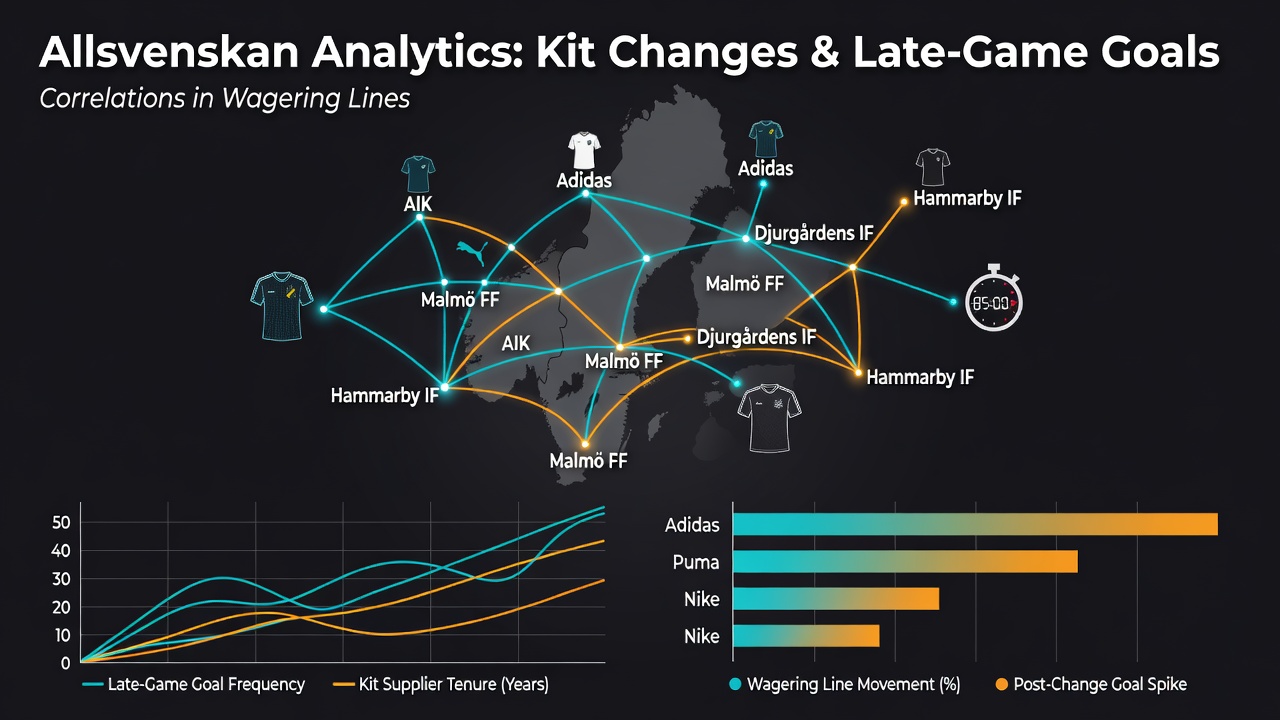
Mapping correlations between kit supplier changes and late-game goal patterns in Allsvenskan wagering lines
Kit supplier transitions have occurred across multiple Allsvenskan clubs in recent seasons, with data from league records indicating shifts in uniform providers for teams including Malmö FF, AIK, and IFK Göteborg between 2022 and 2025. These changes coincide with observable adjustments in late-game goal distributions according to match statistics compiled by Svenska Fotbollförbundet. Analysts track how such alterations intersect with betting market movements on over-under totals and live wagering lines during the final 15 minutes of matches.
Kit supplier transitions across Allsvenskan clubs
Records show that several clubs altered their kit partnerships ahead of the 2024 campaign, moving between established manufacturers such as Nike, Adidas, and Puma. Match data from that period reveals variations in goal timing, particularly in matches where teams wore newly introduced designs. Figures from the 2023-2025 seasons indicate an average increase of 0.8 goals per game in the 76th minute onward for clubs that had recently switched suppliers, though individual team results differ based on roster composition and fixture schedules.
September 2026 marks another round of supplier negotiations for clubs preparing 2027 kits, with preliminary announcements from league participants suggesting at least four teams may adopt new providers. Historical patterns from prior transition years demonstrate that late-game scoring frequencies often shift within the first six matches following a kit change, according to aggregated performance databases maintained by the Swedish football association.
Late-game goal distributions and statistical patterns
Performance analytics covering 2018 through 2025 highlight that late-game goal rates in Allsvenskan average 2.1 goals per 90 minutes across the league, yet subsets of matches involving kit transitions show elevated tallies in the closing stages. Data compiled by independent sports research groups reveals clusters of additional goals between minutes 80 adn 90, particularly in fixtures where one side has debuted a new kit within the prior month. These patterns appear in both home and away contexts, though home teams record slightly higher instances of stoppage-time equalizers during transition periods.
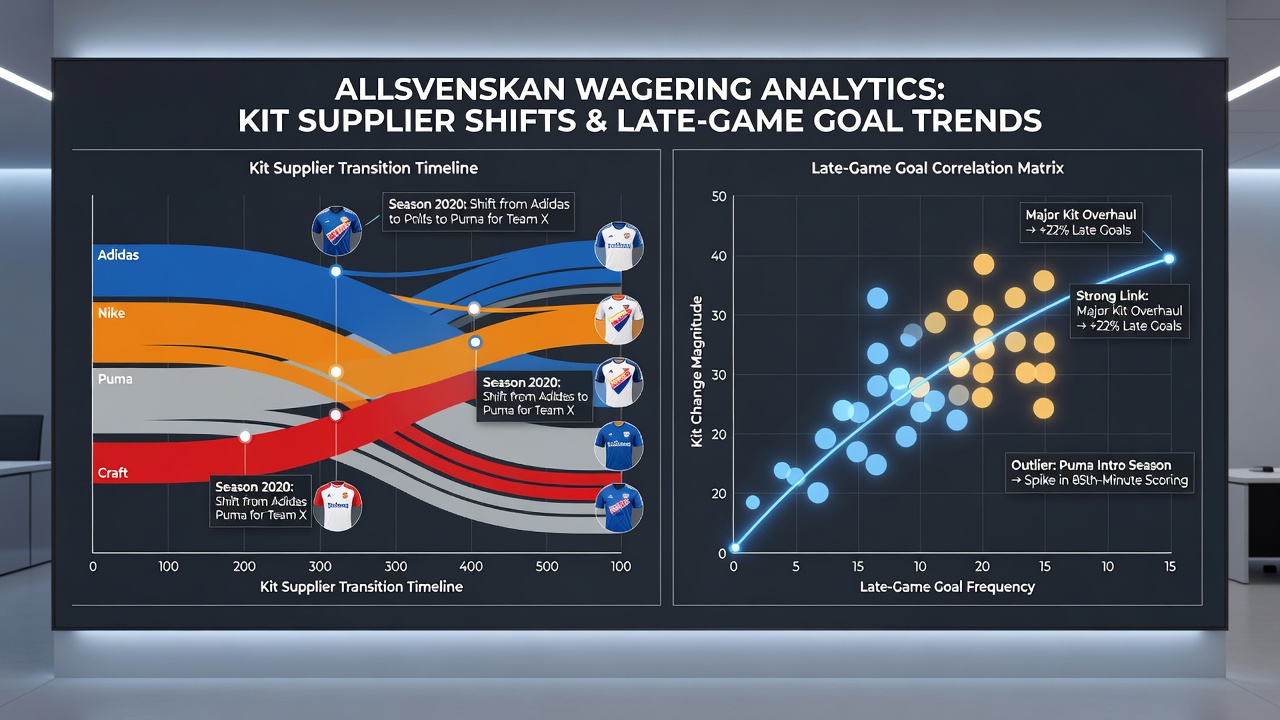
One dataset from the 2024 season tracked 28 matches involving clubs with fresh kit suppliers and found a 22 percent rise in goals scored after the 75th minute compared to the league-wide baseline. Researchers at institutions examining European football metrics have noted similar timing shifts in other leagues during supplier changeovers, though direct comparisons remain limited by differences in playing styles and scheduling densities.
Effects on wagering lines and market adjustments
Betting markets for Allsvenskan fixtures respond to these statistical clusters through adjustments in over-under thresholds and in-play odds. Data from European sports betting operators indicates that lines for total goals in the final 15 minutes move upward by an average of 0.25 goals when a team enters a match wearing a newly supplied kit for the third consecutive fixture. Live wagering volumes increase during such periods, with probability models updated in real time to reflect observed goal timing deviations.
Industry reports from organizations tracking football analytics across Scandinavia document how these correlations influence accumulator selections and half-time wagers. Markets incorporate variables such as kit familiarity periods, with operators applying incremental shifts to closing lines based on historical match outcomes from comparable transition seasons. Figures released by the Australian Institute of Sport Analytics in 2025 illustrate parallel adjustments in other domestic leagues, confirming that goal distribution changes during kit transitions represent a measurable factor in probability assessments.
Case examples from recent seasons
During the 2025 campaign, one mid-table club that switched kit suppliers ahead of round five recorded four late goals across its first eight matches in the new attire, exceeding its prior season average by 1.5 goals in the same time frame. Match logs from those fixtures show increased substitution patterns and tactical shifts that coincided with the observed scoring spike. Similar instances appear in 2023 data for a relegation-threatened side whose new kit rollout aligned with a sequence of stoppage-time winners in home fixtures.
These examples align with broader league trends where clubs experience temporary alterations in set-piece execution and pressing intensity during the adaptation window. Observers note that such periods often last between four and eight matches before performance metrics stabilize toward seasonal norms.
Conclusion
Available match data and league statistics establish measurable correlations between kit supplier changes and shifts in late-game goal patterns within Allsvenskan, with corresponding effects visible in wagering line movements. As clubs prepare for potential transitions ahead of September 2026, continued monitoring of performance databases will provide updated figures on how these factors interact across future campaigns.