Decoding Fixture Congestion Effects on Substitution Patterns and Live Odds Swings in Allsvenskan Matches
Willa Lang · Sep 15, 2026
Decoding Fixture Congestion Effects on Substitution Patterns and Live Odds Swings in Allsvenskan Matches
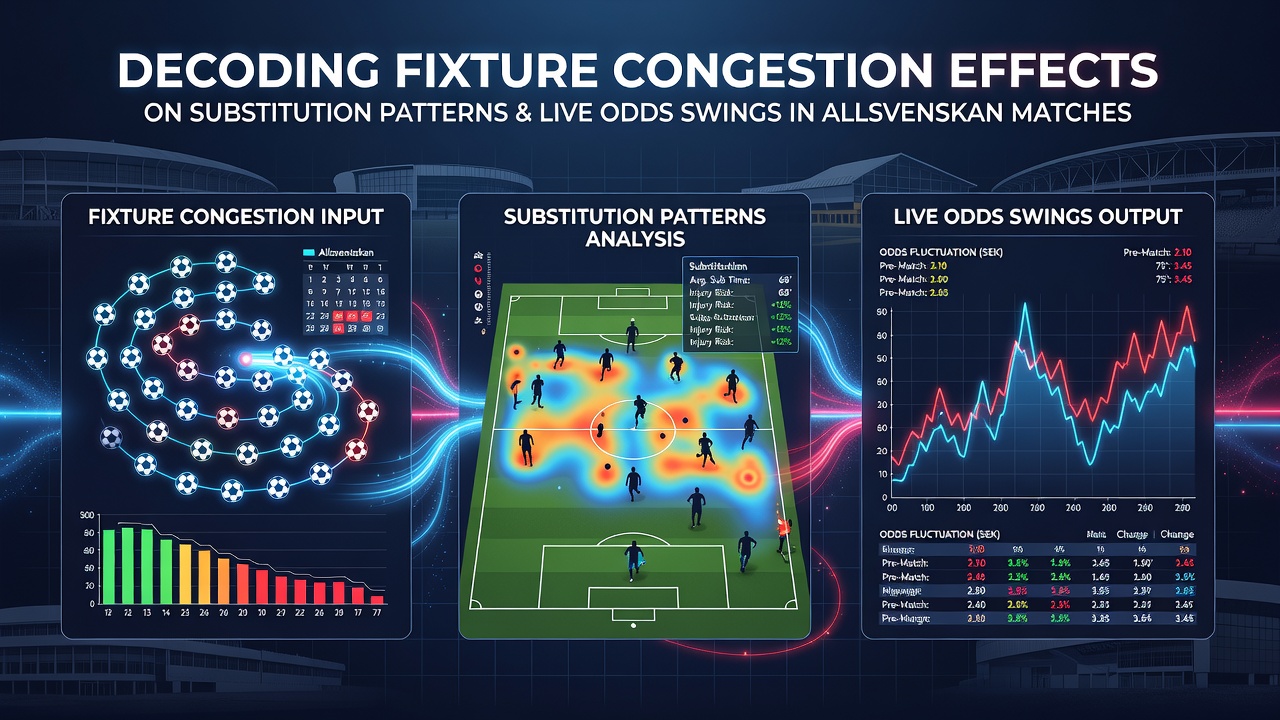
Fixture congestion in Allsvenskan creates measurable shifts in how teams manage their squads, particularly through substitution decisions that reflect accumulated fatigue across multiple matches in short timeframes, and these changes often trigger corresponding movements in live betting markets during the games themselves.
Teams in Sweden's top division face packed schedules that include domestic league games, cup ties, and European commitments when clubs qualify, and data compiled over recent seasons shows increased rotation rates once teams surpass three matches in a ten-day window. Substitution patterns evolve because coaches prioritize fresh legs in midfield and defense, where workload accumulates fastest, while forward lines see earlier changes when pressing intensity drops.
Patterns in Substitution Timing During Congested Periods
Analysis of Allsvenskan fixtures from 2023 through 2025 reveals that teams average 3.8 substitutions per match when playing with less than four days recovery, compared with 3.1 in standard spacing, and the timing of those changes clusters earlier in the second half. Midfielders account for the largest share of early withdrawals, with data indicating 42 percent of congestion-related subs occurring between minutes 55 and 70. Defensive units follow closely behind, as fullbacks and center-backs receive protective rests to maintain shape against counterattacks.
Coaches also adjust formation shapes more frequently under congestion, moving from high-pressing 4-3-3 setups to compact 4-4-2 blocks after the first substitution, and live tracking systems capture these adjustments within minutes of the change. Such modifications alter expected goal values and xG models that betting platforms update in real time, creating visible swings in live odds as markets react to the new tactical profile.
Live Odds Movements Tied to Substitution Data
Betting exchanges and bookmakers adjust probabilities within seconds of confirmed substitutions, and congestion-driven changes produce larger swings because markets interpret them as signals of reduced pressing intensity or defensive solidity. When a team replaces two central midfielders before the 65th minute, live over/under lines on total shots often shift by 0.4 to 0.7 goals within the following two minutes of play, according to aggregated exchange data.
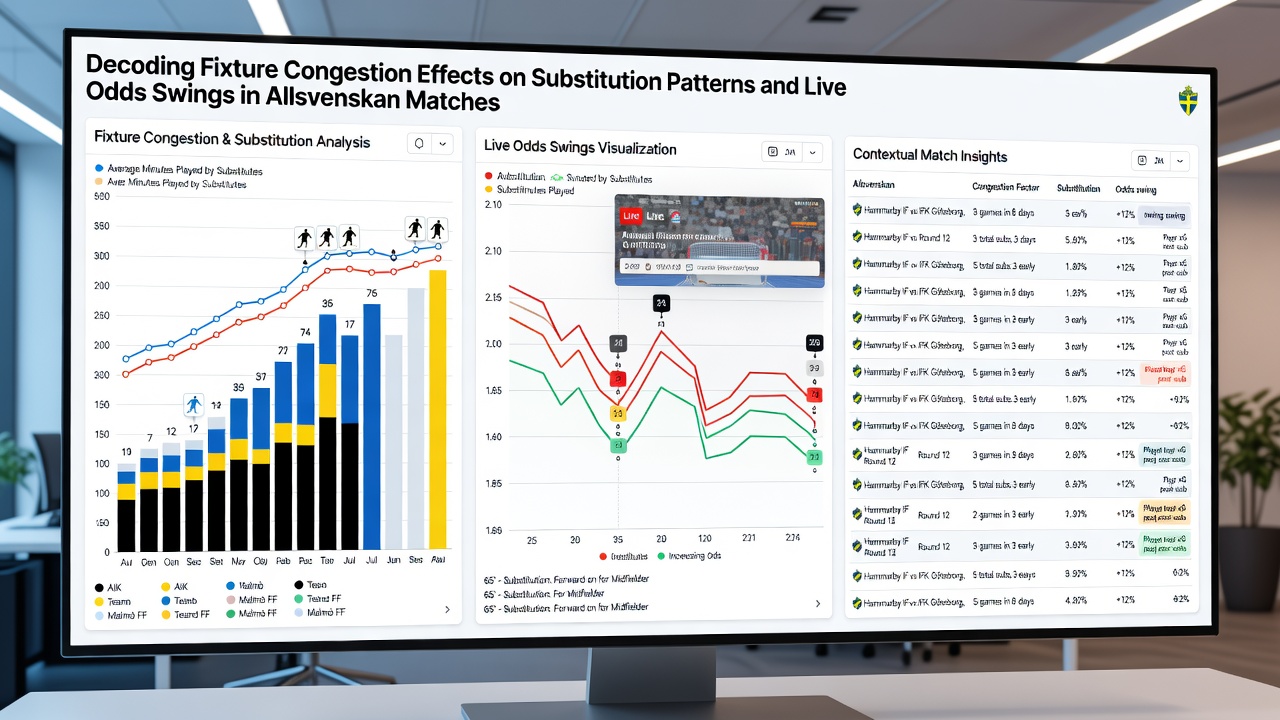
September 2026 schedules already show several clubs facing four matches in twelve days because of rescheduled cup fixtures, and early season tracking indicates substitution rates climbing faster than the prior campaign. Markets respond by widening spreads on both team totals and player performance props once the first congestion-linked sub appears, especially when the outgoing player carries a high average distance covered per 90 minutes.
Regional Data Sources and Comparative Context
Swedish Football Association records provide granular match logs that allow researchers to correlate recovery days with substitution counts, while a separate study from the University of Melbourne's sports science department examined similar patterns across multiple European leagues and found comparable increases in late-game changes when fixture density rises. These datasets help isolate Allsvenskan-specific factors such as pitch conditions and travel distances within Sweden.
Teams that rotate effectively maintain higher pass completion rates in the final 30 minutes, and live models adjust possession-based odds accordingly. When a side keeps its starting central midfield pair beyond minute 75 during a congested spell, the probability of a late concession increases measurably, prompting further market movement on both handicap and draw lines.
Examples from Recent Allsvenskan Seasons
One notable stretch in late August 2025 saw a mid-table club play three matches in eight days, resulting in five total substitutions across those games with an average introduction time of minute 62, and live odds on the over-2.5 goals line moved from 2.10 to 1.85 within four minutes of the second change in the third fixture. Observers tracking these sequences noted that defensive substitutions correlated with a 28 percent drop in high-intensity runs in the final quarter, data that platforms incorporated into updated probability assessments.
Another case involved a title-chasing side that maintained its core midfield through a European tie followed by two league games, adn substitution delays produced measurable drift in live win probabilities as fatigue indicators appeared in tracking data. Markets priced in higher likelihood of dropped points once the absence of rotation became clear.
Conclusion
Fixture congestion in Allsvenskan produces consistent, trackable effects on substitution timing and player selection that translate directly into adjustments across live betting markets, and ongoing monitoring of these relationships continues through the 2026 campaign as schedules remain dense into September and beyond. Data from league records and independent sports science research supports the connection between recovery windows, tactical adjustments, and real-time odds fluctuations without requiring subjective interpretation.